Writing on military history, war reporting, military book reviews, military publishers, army, navy, air force, world wars, military publications, military memoirs, historical novels, Great War, World War One, World War Two, Anglo-Boer War, combat, medals, militaria. [Copyright Sidney Allinson 2010. May be re-printed on condition attribution is stated along with a URL link to Warwriting.]
Friday, September 09, 2005
BOOK REVIEW - "Soldier Boys."
Soldier Boys, by G. F. McCauley, General Store Publishing, 317 pages, $22.95
This well-researched novel is set in the Second World War, about a group of young men from
McCauley handles language well, as befits an ex-Member of Parliament as he is, and tells the story from the viewpoint of the diary of Barney Berman, a Jewish youngster. He voices a running commentary of the training in
-- Sidney Allinson.
Sunday, September 04, 2005
Courageous Military Women
Reviews by Sidney Allinson
Recently, it was announced that US Army Private Jessica Lynch is to be paid a million dollars for a book about her seven days as a prisoner-of-war in Iraq. Her story contrasts with three recent books about many Canadian, American, and British women who faced warfare with scant praise or financial reward for it.
Less well known than Pvt. Lynch, and by no means as handsomely paid, is US Army Major Rhonda Cornum, who was briefly a POW in Iraq 12 years ago. Soon afterwards, she wrote She Went To War, [Ballantine Books, New York, 203 pages, photographs, $22.95.] When first published in 1992, it was declared one of the most notable books of the year by The New York Times, and is now re-published because of current events in the Middle East.
"As told to Peter Copeland," it is a ghost-written account which reflects a gallant soldier, physician, and pilot, who just happens to be a woman. As well as being a military officer, she is also a wife, and had to leave her husband and child when assigned to duty in the Persian Gulf in 1990. She refreshes our memory of that first go-around with Saddam Hussein after his army invaded Kuwait. Her compassion for ordinary Muslim people is clear, as is her unabashed patriotism and personal belief in the justice of America's cause at the time. She is a strong proponent of women in the military, and makes a sturdy case for increasing the proportionate number of female soldiers even more.
Cornum was a 34-year-old flight surgeon on a mission to rescue a downed pilot when anti-aircraft fire crashed her helicopter onto the Iraq desert. Five of her fellow soldiers were killed and Cornum suffered two broken arms and a gunshot wound. In severe pain, she was taken prisoner, one of the two American servicewomen who became POWs in Operation Desert Storm. Her courage during the next week earned her the Distinguished Flying Cross and Purple Heart medals. After being roughly dragged from the wreckage without regard for her injuries, she was hustled away by her captors for interrogation.
She had heard how some Iraqi soldiers had sexually abused women in Kuwait, but other than having her wedding ring stolen, at first there was not as much violence as she expected. However while she was being transported in the back of a truck, a guard tried to rape her. She recalls being more incredulous than anything else at the time, aware of her own bloody and mud-caked appearance. Fortunately, she managed to keep her would-be molester at bay by struggling and screaming loudly throughout the entire 30-minute drive.
Cornum describes what she stoically went through while a POW for the next six days, constantly uncertain if she was going to live or die. Some captors treated her with kindness, while others made her watch the torture of male American prisoners. When hostilities soon ended, she was returned to the States and repeatedly honoured by lavish ceremonials, like Pvt. Lynch. Without intending to denigrate either individual personally, their elevation to media celebrity status for one-week experiences does seem a little overblown, considering that many thousands of Allied men and women endured up to six years captivity in pre-CNN wars without any public acclaim afterwards.
Among the very bravest of them are described in The Women Who Lived For Danger, by Marcus Binney [Coronet Books, London, 380 pages, photos, index, bibliography, $16.99.] During World War II, thirty-seven female secret agents of Britain's Special Operations Executive infiltrated German-occupied France to work as couriers, radio operators, or saboteurs. Thirteen were captured and tortured to death or executed in concentration camps. Binney ably combines fresh details from newly released official files in the Public Records Office with personal interviews with a few elderly survivors to write the story of eight of these outstandingly gallant women.
He does an excellent job of describing their lives, characters, and achievements, though the tragic fate of some makes grim reading. They all volunteered for highly dangerous clandestine warfare, despite knowing the one-in-four odds of being arrested, brutally ill-treated, and murdered. Their personnel files described them variously as being "talkative," or "clumsy," while others were assessed as "determined," or "a crack shot." In the end, though, every one of them proved to be courageous almost beyond belief.
Mostly aged in their twenties, SOE "girls" (as they were called) were given arduous training in physical fitness, weapons, and radio codes before being sent into action. Photographs show they were not only youthful, most were attractive as well –- too conspicuous-looking you'd think for a secret agent. Yet later in the field, they sometimes turned their feminine charms to advantage, while gathering information or talking their way out of awkward questioning.
Each agent had complete fluency in the French language, but came from a variety of backgrounds and nationalities. They included Noor Inayat Khan, the strikingly pretty daughter of a Sufi mystic, who worked as a radio operator in Paris until a Frenchwoman betrayed her to the Gestapo, and Peggy Knight, a 23-year-old shorthand typist, who had only a month's SOE training before she parachuted into enemy territory, earning an MBE and Croix de Guerre for leading Resistance raids.
Three women agents received the highest possible award for gallantry, the George Cross – Odette Sansom, Violette Bushell Szabo, and Noor Inayat Khan, the last two posthumously. Another brave beauty, Christine Granville, received the George Medal for her outstanding services and survived the war, only to be murdered by an unrequited lover years later. Virginia Hall, an intrepid one-legged American who served three years undercover, was the first woman to receive the Distinguished Service Cross.
Further chapters detail the adventures of other exceptional heroines, each one of whom had true-life espionage adventures far beyond any fictional James Bond movie. Binney’s book is one of the best accounts yet of female operatives in SOE, and is a moving testament to their courage. It includes a useful glossary for readers not familiar with World War Two terminology.
Gentler experiences are described in Brass Buttons and Silver Horseshoes: Stories From Canada’s British War Brides, by Linda Granfield, [McClelland & Stewart, 140 pages, photographs, $22.95.] The title refers to brass buttons on soldiers' uniforms and the silver paper horseshoes traditionally given to brides for good luck. After World War Two, 48,000 British "war brides" and 22,000 children immigrated to Canada to join their ex-military husbands. This collection of interviews recounts the typical experiences of 40 of them, told in their own words. Linda Granfield, who was an immigrant herself (from Boston, Mass.) shows warm understanding while eliciting these highly personal stories of young women who journeyed so far to settle in an unknown land.Averagely aged in the early 20's, most had never traveled away from home before, and only the vaguest idea of living conditions here, yet all seem to have adapted to enormous changes with cheerful courage. Their stories are a mixture of funny, romantic, and sad experiences, but all have something in common. They tell of falling in love with dashing young Canadian servicemen in whirlwind wartime love affairs, headlong weddings catered despite scarce food rationing, and being fearfully separated from new husbands suddenly sent off into combat.
At war's end, the Canadian government efficiently organized the women's transportation by ship across the Atlantic, many bringing young children. Once in Canada, their husbands seen in civilian clothes for the first time seemed to be almost strangers, and not all the reunions were successful. But for the most part, war brides settled into their new homes and made enduring marriages that lasted happily ever after. As well, the women themselves have stayed in touch through all the years since, and in 2000 they placed a memorial plaque to commemorate their arrival in Halifax 60 years before.
Interspersed among the personal memories are 1940's magazine advertisements, recruiting posters, ships' menus, and snapshot photos. They add graphic understanding of contemporary clothing, living conditions, and atmosphere at the time. By compiling this account, Linda Granfield provides a valuable record of the little-known contribution made by British war brides to building our post-war Canadian society.
Book Review
Book Review
Title: "Kruger's Gold
Author: Sidney Allinson
Publisher and Distributor: Xlibris
Website: www.xlibris.com/krugersgold.html
Pages: 298 Price: $18.69 / 28.79 ISBN: 0-7388-6586-9
Reader: Bob Spear
Rating: Four Hearts
Kruger's Gold is an excellent historical military novel about the Anglo-Boer War in South Africa in 1902. An up from the ranks Canadian Lieutenant, Harry Lanyard, leads a patrol of colonial personnel for the British Army on a mission to find millions in gold left behind by ex-Transvaal President, Paul Kruger, during his forced exile from Africa. Harry must fight Boer guerillas, dissention in his own ranks, a Boer spy, a Russian spy, and the love of his life. The book is based on superb research of many real-life events.
It's not often we see anything on the Boer war, so this is an excellent and welcome addition to the genre. The author is a fine writer (Boulter Award winner) and military historian. He has six books under his belt and it shows. He uses excellent characterization and dialogue. His settings come to life, and he uses good plot twists. We top rated this book Four Hearts.
For a free sample chapter, see:
www.xlibris.com/krugersgold.html
Sunday, August 21, 2005
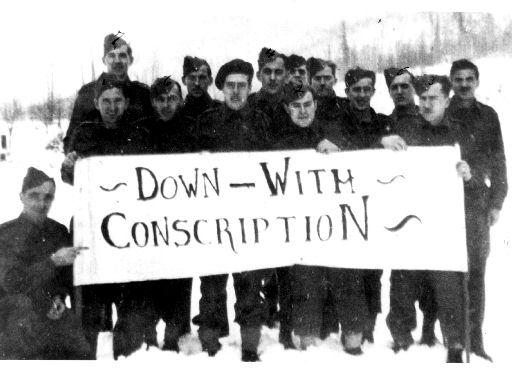
"ZOMBIES"
Canadian troops at ZOMBIES
The Canadian soldiers who refused to fight
Laurence F. Wilmot, MC, Wilfrid Laurier University Press.
Reviewed by Sidney Allinson.
This is a rather good military memoir. The late Canon Laurence Wilmot's book provides rare insights into front-line combat conditions through the eyes of a Second World War army chaplain. His memory remained remarkably keen even when recalled 50 years later, considering the author was aged 91 years old when he wrote his book. In 1942, he was already past the usual age of army service, an Anglican priest far from harms way. He had to first insist that his church allow him to enlist, and then pester the Canadian army until they accepted him as a chaplain.
He was also equally determined to serve where he was most needed – in combat. Soon, he was attached to the West Nova Scotia Regiment and served with it throughout its bloody campaign in Italy. His compassionate depiction of courage and self-sacrifice by so-called ordinary Canadians – while neither glorifying war nor belittling warriors – documents the price of the freedom we enjoy to this day.
Wilmott's description of infantry fighting in Italy is as good as it gets. He is particularly vivid when describing a little-known battle at the Arielli. He served in the thick of things there, working as a frontline stretcher-bearer, helping to bring in scores of wounded men while under heavy enemy fire himself. He conveys his compassion and devotion to the soldiers, without a flicker of self-aggrandizement. The book jacket blurb is the only way you would know he was awarded the Military Cross for bravery in 1944. During his long career later, Canon Laurence Wilmott became Warden Emeritus of St. John's College, Winnipeg, then passed away recently, at the venerable age of 96.
-- Sidney Allinson.
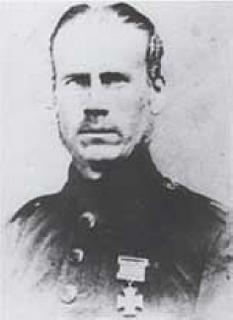
The Only Victoria Cross Awarded in Canada.

St. Patrick's Day is an apt time to recall that the only Victoria Cross medal to be awarded for bravery on Canadian soil was won by an Irishman. Timothy O'Hea was born in the scenic village of Schull, County Cork, Ireland, in 1843, but left home as soon as he became 18, old enough to join the British Army. Six feet tall and blue-eyed, he made a fine-looking soldier in a crack regiment, The Prince Consort's Own Rifle Brigade.
Two years later, in 1866, O'Hea found himself on duty in Quebec, helping guard Canada from possible attack from south of the border. At that time, the Canadian provinces were still mainly defended by small units of the British Army, as the bulk of Imperial forces had been withdrawn a decade earlier, sent to fight the Russian Czar during the Crimean War. Their departure drew attention to the colonies' vulnerability and stirred action to form volunteer Canadian militia regiments for their own defence. The end of the US Civil War in 1864 increased fears that the powerful Union Army might then march north to conquest.
As it turned out, though, the real threat of invasion that did develop was by an unofficial army calling itself the Fenian Brotherhood, composed of about 1000 Irish-American war veterans. Their optimistic if farfetched goal was to capture and occupy the Canadian colonies so as to force the British to abandon its government of Ireland.
After an abortive raid on Campobello Island, New Brunswick, the Fenians began to menace Quebec and Ontario. At dawn on June 1, 1866, a force of about 800 well-armed Irishmen and sympathizers, led by a self-styled 'General' John O'Neill, stormed ashore at Fort Erie, Ontario. Their invasion brought hurried response from local militia, who were poorly equipped with muzzle-loading muskets and had virtually no military experience compared to the battle-hardened Irish ex-soldiers.
A short sharp battle near the village of Ridgeway ended in a rout for the Canadians who lost 10 men dead, then fled the field when falsely told of a pending attack by cavalry. A couple of other skirmishes took place along the frontier, more successfully when British regulars became involved, and the Fenians retreated to Buffalo, New York. Would-be General O'Neill and his followers were arrested by American authorities for violating US neutrality laws, but were soon released when Britain made no move to demand their extradition.
However, the atmosphere was still tense along the entire border three weeks later when Private O'Hea was detailed to form part of an armed escort of a Grand Trunk Railway train moving ammunition from Montreal to Fort Erie. On June 19, 1866, he and three other privates under orders of a Sergeant Hill took charge of a munitions van loaded with 95 barrels of gunpowder and 2000 pounds of ammunition. To disguise the cargo, it was hitched at the rear of several passenger-cars carrying 800 German immigrants. This somewhat dangerous arrangement was compounded by locking the civilians in their carriages, to prevent any infiltration by Fenian agents.
When the train stopped at Danville station, about halfway to its destination, smoke was seen billowing from the ammunition car. Railroad workers and the soldiers quickly disconnected it, but were unable to move it away to a safe distance. When the flames gained strength and word spread about the dangerous cargo, it was realized an explosion could obliterate most of the village, and panic set in among the bystanders who stampeded away. Soldiers made a hurried attempt to open the passenger doors and release the German men, women, and children locked inside and still unaware of their dangerous plight. But a frantic call for the keys revealed that the railwayman who carried the passenger door keys had already scampered away and could not be found.
For reasons unknown, Sgt. Hall apparently stood frozen with indecision, ammo key in hand. Realizing that the gunpowder could blow up at any moment, Private O'Hea snatched the key, found a ladder, and climbed inside the smoking box-car. Seeing the flames were mainly on tarpaulins over the powder-barrels, he threw the burning covers outside, then he leaped down, grabbed a bucket, and raced to fill it from a nearby creek. Without any assistance from others, Timothy ran back and forth 19 times to throw water on the burning woodwork, while the locked-in immigrants cheered happily, not realizing their lives depended on him. Finally, after almost an hour of hot work in the face of almost certain death and without regard for his own safety, he single-handedly quenched the flames and the trapped civilians were out of danger at last.
The doused box-car was re-coupled to the immigrant train, and proceeded on its way to Montreal. After his superiors received reports of O'Hea's outstanding courage, they recommended the young soldier be awarded a Victoria Cross, Britain's highest military medal. When originally introduced by Queen Victoria in 1856, the VC was intended as recognition "For conspicuous bravery in the face of the enemy." However, this definition was soon amended to also include "bravery under circumstances of great danger," and it was this clause that allowed Pte. O'Hea to be presented with a much-honoured VC in January, 1867.
Though he could have continued military service with considerable prestige, O'Hea for his own reasons left the army the year after receiving his medal. Restless for new challenges, he sailed to New Zealand in 1872, and joined a mounted constabulary unit fighting in the last Maori War. Two years later, he sailed to Sydney, Australia, where he met Andrew Hume and an English ex-soldier, Lewis Thompson. The pair were about to set out to solve the mysterious fate of Prussian explorer Ludwig Leichardt who had disappeared in the Simpson Desert of northern Australia 25 years before. Their intended quest intrigued O'Hea, who maybe was also struck by another German connection with his own search for excitement.
So, in December, 1874, he set out with them into the trackless Outback, hoping to locate a lone survivor of the Leichardt party, rumoured to be living with an aboriginal tribe in western Queensland. Before long, though, the three companions became hopelessly lost in the blazing hot desert, out of food and desperately short of water. Tough as he was, O'Hea finally collapsed, and Hume was also exhausted. Promising to return, Thompson left them and set off to find water. But when he came back with filled canteens three days later, he found Hume and O'Hea lying dead. The Irish VC's adventurous short life had ended at the age of just 28, and he was buried in an un-marked grave at Noccundria Station, Queensland.
Feeding the modern hunger for conspiracies, O'Hea's saga has recently been clouded with complicated theories of mistaken identity and dotty speculation it was his brother instead who died. The real mystery of the disappearance of his medal itself was solved in 1950, when it was found forgotten in a drawer of an art gallery in New South Wales. He had left it as security for a loan by a financial backer, who later presented it to the gallery. Today, Timothy O'Hea's Victoria Cross is proudly displayed by his old regiment in the Royal Green Jackets Museum, Winchester, England.
Sidney Allinson is a Canadian military historian, author of
"The BANTAMS: The Untold Story Of World War One."
Saturday, August 20, 2005
Warriors' Day Parade Recognizes Canada's Military Service
| TORONTO, ONTARIO-- (CCNMatthews - Aug. 20, 2005) - The Minister of Veterans Affairs, the Honourable Albina Guarnieri, joined thousands of spectators to mark the 84th anniversary of the Warriors' Day Parade and recognize the efforts of all service men and women. The Warriors' Day Parade, held annually on the first Saturday of the Canadian National Exhibition, is the oldest continuous military parade of its type, with approximately 2,500 participants and over 10,000 spectators. Initially held to recognize the importance of allocating a specific day to pay tribute to Veterans of the Great War of 1914-1918, the parade has evolved to pay tribute to all service men and women. "A public display of the sacrifices made for peace and freedom, the Warriors' Day Parade serves as a special reminder of the valour of many Canadians, and is a real testament to Canada's military history," said Minister Guarnieri. "I was especially pleased to see so many people out at the parade, during the Year of the Veteran, to collectively remember Canada's heroes, retell Canada's history and inspire Canada's youth." This year's parade featured cadets, and, in honour of the 60th anniversary of the end of the Second World War, all allied military Veterans of the war. For more information on this event, or to find out more about Canada's efforts to honour those who served for our nation in Canada's military history, visit www.vac-acc.gc.ca. 2005 is the Year of the Veteran: Celebrate. Honour. Remember. Teach. Thank. |
Book Review - "The Sojourn."
Sixty-four thousand Canadian servicemen were killed during the First World War, mostly while fighting along the Western Front in
Already named as a Globe & Mail Notable Book of the Year, The Sojourn follows the adventures of Ramsay Crome, a young private soldier from
Cumyn presents it all in a matter-of-fact way, using spare clear language whose understatedness emphasizes the horrors it depicts. He writes his story in the present tense, a style that gives a sort of rushing you-are-there immediacy to the narrative. The author obviously did his homework about the vile conditions in the trenches. He describes "The fields of France and Belgium, where all the trees are shattered stumps, and the air is choked with smoke and fire a million times blacker than London on its worst winter's day, and the stench of bodies makes the factory smell like apple blossoms, and the gas hangs low in trenches and turns them into swamps of death."
This nightmare is interrupted by notification of some home leave, which makes Crome look at himself and his comrades differently. "Just before I leave, a section of new recruits comes through for their showers. I know they're new because of how clean, bright-eyed, undamaged they look. They stand too straight, laugh too loud, take over the place as if it's their private party. How cocky and stupid they seem."
Within a few hours, Crome is whisked by train and Channel ferry from the hellish trenches to the peaceful gaiety of
'"The war is swallowing everything,' Margaret says to me.' "It's like a great omnivorous beast from which nothing is safe. It affects what we eat, what we talk about, what we dream at night, our first thoughts in the morning. I'm sick of it!"'
'"We'll win it," I say quietly, '"We're going to win it soon."'
A hot bath and breakfast of scrambled eggs seems miraculous, and he finds it hard to adapt to other simple comforts. His relatives take him out on merry sight-seeing tours, but the sudden contrast between the muddy trenches in
On his last day's leave, Crome arises early, somehow compelled to return to the dreaded front without delay. There, he is plunged again into brutal combat, scenes vividly told with still greater intensity. Alan Cumyn's The Sojourn is a uniquely splendid novel that enables us to grasp the enormous void of perception of war experiences that can never be bridged between soldier and civilian.
Tuesday, January 18, 2005
Presentism vs. accuracy.
Just now, I came across a quotation that well defines this plague that has been brought about by either political correctness or sloppy research:
[Stephen Howe; Fade to Blue; Independent (London, UK); Jul 12, 2003.]
Friday, January 14, 2005
The Untold Story Of World War One
This is to announce that a revised new edition of my 1981 [non-fiction] historical book, "THE BANTAMS: The Untold Story Of World War One" is being re-published this very day, Pen & Sword Books, UK..
It contains much detail of daily life on the home front in Britain and Canada during World War One -- "The Great War" -- and also presents an unblinking picture of trench warfare in France and Belgium during the 1914-1918 era.
My book is a unique study of the 50,000 British and Canadian men below the regulation height of 5ft. 3ins. who volunteered to serve in Bantam battalions during the First World War. 'Based on many personal wartime recollections of 350 veteran Bantams I interviewed, plus accurate first-hand accounts of trench warfare, and includes numerous rare photographs of the Great War never published elsewhere.
Originally published in London, England, this revised version also contains a good deal of new information that was not public knowledge when I originally researched it -- including disquieting details of military executions.
To read a free sample chapter, go to:
http://www.bantamsoldiers.com
-- Sidney Allinson.
WARWRITING: Reading and writing for military buffs.
This is not said to glorify war; quite the contrary. Nobody detests the pain, horror, and wholesale deaths of combat more than do warriors themselves. Yet, over the past few decades, public understanding of the importance of military history to our society today has become so eroded as to be virtually non-existent, and the armed services have fallen into disrepute. This change has come about over the past 30 years, largely because study of history in general, and military history in particular, is no longer taught by most schools and universities in English-speaking countries. Whenever military issues ever do happen by chance to be raised in academe, teachers' most common response is cliche-ridden scorn and pacifist distortion, born of their own personal lack of knowledge about actual political/military events of the past.
Print and broadcast media are also dominated by the new dogma of 'political correctness' that rejects the validity of patriotism and the harsh lessons of history that has proved time and again the necessity of democratic nations sometimes needing to go to war to protect their very survival. Press pundits and television anchor-persons habitually show an almost laughable ignorance of the historical background of the countries, conflicts, or disasters they gravely purport to be explaining. They rarely offer any historical perspective, but instead often perpetuate the widespread simple ignorance of past events that has brought about a sort of naive expectation of permanent universal peace.
Seldom mentioned now in the halls of academe or by TV and newspapers, is that the very freedom we enjoy in Western countries today was bought at the human cost of millions of men and women who fought and died to defeat oppressive regime. As a military historian myself, who has researched and written about military affairs for many years, I believe that more widespread understanding of the role of warfare in world history is the best possible weapon in the struggle for world peace.
From time to time, I intend to write on this 'blog' about the enjoyment and benefits of studying and writing military history, with excerpts from my own books and those of other authors. I intend this site to develop and grow gradually, with added helpful information about writing and reading military books, articles, theses, movie scripts, and Web sites. As part of a collective process, I cordially welcome comments from like-minded visitors about the topic and any other suggested readings in military history they care to share here.
Best Regards.
-- Sidney Allinson.